1
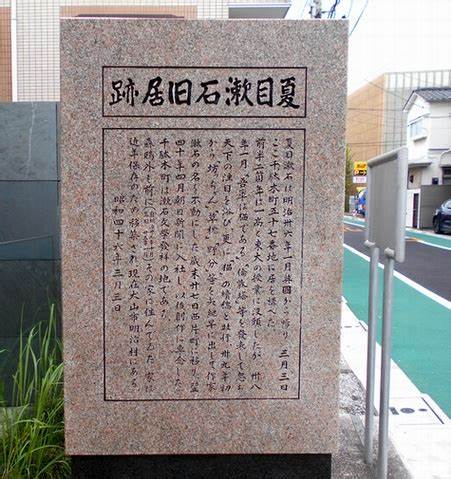
・I had caught a cold, so I was thinking
about many things while looking outside through
the glass door.
・Would the novels I publish in the newspaper
be understandable to a Meiji era person who
has no free time to read anything but the
writing that stimulates his senses?
・I write novels with contempt for people
of the Meiji era who read newspapers in this
way.
2
・A man from a magazine who made a deep
impression on me came and took my photo.

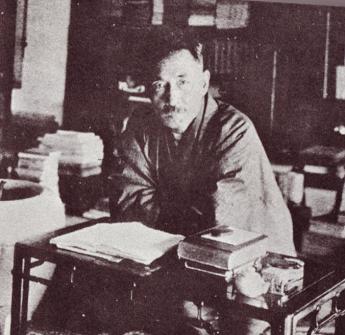
・He sent me the photo, but the magazine
it appeared in never arrived.
3
Hecto is the name of a Trojan soldier in
the Iliad.
・When I received Hektor from Mr. H, he
was wrapped in a cloth and brought on the
train. I laid him down in the corner of the
storeroom on straw so he wouldn't get cold.
4
・.Hector had forgotten my voice after
not seeing me for a month.
5
・Hector was found dead in someone else's
pond. 「I buried him in the ground where
the autumn wind could not be heard.」
6
・A woman came to my house
7
「If we consider the act of living to
be the basis of human existence, then there
is nothing wrong with it remaining as it
is, but if we begin to value beautiful and
noble things as good things, then
our thinking will surely change.」
8
Although I trudge through an unpleasant life,
I think seriously about death, which I must
reach someday.
「Death is more precious than life」
but Doctors, for example, will deliberately
insert intravenous needles into patients
who are soon to die, in order to prolong
their suffering for even just a moment. Even
an act as though it were torture shows just
how attached we are to life.
9
Tatsuto Ota (1866-1945) was an educator from
Higashinakano Village, Iwate County, Mutsu
Province (present-day Morioka City). His
father was a samurai from the Morioka Domain.
He was a close friend of Natsume Soseki since
their days at the University Preparatory
School, and he appears as his friend "O"
in Natsume's autobiographical work "Behind
the Glass Door" in his later years.
・He is now the principal of a school in
Karafuto.
10
・Ota still has the same plump, feminine
face, apple-like cheeks and big eyes as He did
back then, but He has a different aura about
him now.
・Is he still the principal of a junior
high school?
11
Many people came to our house.
・After reading the woman's manuscript, he
criticized it.
・In summary, if diplomacy is only on the
surface, with the aim of maintaining the
status quo, you will not be able to open
your heart.
12
A common story
.jpg) SAKOSHI
SAKOSHI
・I have never forgotten about the tea and
postcard I received from someone living in
Sakoshi in Banshu.
・I apologized to Iwasaki for my negligence.
13
・It was the first time I'd seen someone
so loyal to their work.
14
During the time when the world was abuzz
with talk of loyalists and supporters of
the shogunate, a burglar broke into my house.
・Why was my childhood home called a 「 Genka」?
・One night, eight thieves carrying swords
entered the house, and the eldest daughter
happened to be there.
・Apparently he was introduced to our house
by Mr. Hanbei of Oguraya.
・50 ryo were stolen by eight thieves.
15
Small lecture fee.
・Remuneration from Gakushuin.
・I complained to Mr. K about the fee, and
he replied, "I'll think about it."
16
I went to the barber shop near my house.
・I told him about a geisha house called
Azumaya.
17
I remembered a Azumaya well.
・It was near my cousin's house.This is where
my older brother and maternal cousins gathered.
・This is near the geisha house.There we
played cards with a geisha Sakimatsu.
・Sakimatsu was the barber's niece.Sakimatsu
died in Siberia in 1889.
・I realized that the only people who hadn't
died yet were me and the barber.
The following is also written in Jun Eto's
"Soseki and His Times."
・In 1868, Soseki was adopted into the Shiobara
family.
・Story 17 is probably Soseki's memory from
1872.
・In chapter 38 of "MITHIKUSA
≪"...At the end of the road stood
a large rectangular house with two floors reached by a wide ladder.
The upper and lower floors and the courtyard
surrounded by corridors were also rectangular.≫
≪He imagined the continuous rooms and
the corridors stretching into the distance
as a city with an open ceiling, and so he
ran around in the corridors to play.≫
・≪From time to time he would go up to the
second floor and look down through the latticed
window, and hear the sound of bells jingling
and a succession of horses passing before
his eyes.≫
・≪Across the middle, across the road, was a
large gold-plated Buddha statue, sitting
cross-legged on a lotus with a hat on its
head.≫・・・・・"It may be near the nunnery where
Princess Kazunomiya became a nun."
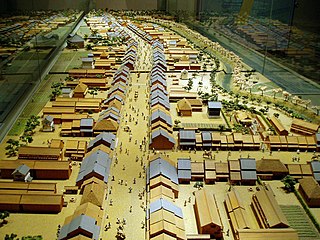
*According to Mr. Eto, this large square
house is located in what is now Shinjuku
2-chome. By government order, all geisha
houses here (20 establishments, 30 geisha,
370 prostitutes) were closed.
新宿二丁目
夏目漱石は明治元年(一八六八)十一月ごろ、内藤新宿の門前名主塩原昌之助の養子となって内藤新宿北町裏に住み、その後太宗寺南側の内藤新宿仲町(内藤新宿二丁目)の妓楼「伊豆橋」で生活していた。漱石の自伝とされる長編小説『道草』には、子供時代の漱石が太宗寺の銅造地蔵菩薩坐像に登って遊んでいたことを示す描写や、甲州街道(新宿通り)を「馬の通る往来」等と記している部分がある。甲州街道については有吉佐和子の小説『恍惚の人』にも登場している街道である。
内藤新宿は明治維新以後も色街としての性格は変わらなかった。前述の漱石は幼少時に内藤新宿の妓楼で生活しており、また四谷大木戸付近に住んでいた田山花袋は回想集『東京の三十年』の中で、新宿通りを大宗寺の筋向うから入って玉川上水(まだ暗渠化されていない)沿いを歩くと月に何回かある性病検査日に女郎がぞろぞろやって来るのに会った、という描写を残している。1873年(明治6年)に「貸座敷渡世規則」が施行され、遊女屋は娼妓に座敷を貸す形での営業が認められることとなったため、それまでの飯盛旅篭は「貸座敷」と呼ばれるようになり、新宿一丁目辺りから新宿三丁目の追分交差点付近まで、53軒の貸座敷が軒を連ねていた。1921年(大正10年)頃までは「張り見世」といい、娼妓が遊客の「お見立て」を待っていたというが、これは後に警視庁に禁止され、代わりに写真を置くようになった(写真見世)。
1918年(大正7年)、警視庁の命令により、貸座敷は旧新宿二丁目の北西部の一角に移転することとなる。元来この場所には牧場があったため「牛屋ヶ原」と呼ばれていた。この牧場は芥川龍之介の実父新原敏三が1888年(明治21年)から1913年(大正2年)まで経営していたところである。
この新宿牧場は、渋沢栄一や益田孝らが箱根仙石原で明治13年に始めた牧畜搾乳業「耕牧舎」が、内藤新宿2丁目にあった有馬兵庫頭と伊沢美作守の屋敷跡の土地約7500坪の払い下げを1887年(明治20年)に受け、その一部(成覚寺西側一帯)を東京支店の牧場としたものだった[3][4]。芥川龍之介の実父・新原敏三はその支配人を務めていたが、明治38年に耕牧舎本店が廃業したのを機に新宿牧場を譲り受けて経営していた[5]。龍之介も一高時代の一時期、牧場の一角にあった新原邸に住んでいた[6]。牧場は大正7年に売却され、跡地に新宿通り一帯にあった遊郭が集められた。
〔 ^ 芥川龍之介旧居跡 新宿さまよい歩き ^ 近代都市における新興自営業主の経営資源と社会移動プロセス−渋沢栄一「耕牧舎」と芥川龍之介実父の搾乳業経営 武田尚子、生活文化史 (70), 3-77, 2016-09.
日本生活文化史学会 『芥川龍之介の父』森啓祐、桜楓社, 〕
18
A woman who came to me
・The woman asked me how to organize my brain.
・From me to the woman., I don't think there
is anyone who can remember everything in
the world and instantly organize it into
clear, orderly order or paragraphs.
・I told women that if they did not want
the benefit of learning, they should go to
a nunnery.
・A woman slid off the bed and then told
me to take care of myself.Soseki has a work called "One Night,"
which is about the events that took place
with this woman???.
19
My old house was in Babashita.
・At the top of the hill, there was a pharmacy
called Omiya Denbeiya. At the top, there
was also a liquor store.
・In addition, there was a workshop where
wood was carved to make hoes and handles,
and there was also an ironworks.
・There was a vegetable market near Hachibanzaka.
・There was a temple right next to the tofu
shop.
*西閑寺とは誓閑寺(浄土宗)のことて゛、生家の斜め向いから入った路地の突き当たりにある。赤く塗られた門はすて゛にないか゛、新宿区内最古といわれる梵鐘は寺の入口左手に現存する。
子と゛もの頃、耳に残ったお寺の音は、『野分』や『門』に描き込まれている。『野分』の主人公白井道也は市谷薬王寺前町(現、市谷薬王寺町)に住んて゛いる。江戸時代、袋寺丁とよは゛れた路地には、入口から左側に薬王寺、浄栄寺、長厳寺、蓮秀寺、右側に長晶寺、妙傳寺か゛あった。このうち、地名に名を残した薬王寺は明治維新頃になくなった。道也の家には、《裏の専念寺て゛夕の御努めをかあんかあんやっている》音か゛聞える。専念寺か゛実際にと゛この寺を念頭に置いたものなのか、寺多くて不詳。
『門』の野中宗助の家にも、夕方になると豆腐屋の喇叭に交って、《円明寺の木魚の音か゛聞えた》。円明寺は「矢来のお釈迦さま」として親しまれている宗柏寺(日蓮宗)と考えられる。道也も宗助も東京へ戻って来た人物。宰西閑寺と専念寺は、その二人の家の傍に設定され、二人ともお寺の音を聞いている。また、有吉佐和子の『和宮御留』にも関係深い土地である。
「もう少し詳しく」 へのリンク
"210 days"
Kei says 「When I was a child, there
was a tofu shop in the center of the town
where I lived.」
Roku says 「There's a tofu shop?」
Kei 「From the corner of the
tofu shop, if you climb up the toe for about
100 meters, you will reach Kankeiji Temple.」
Roku 「Kanngeiji ?」
kei 「Yes, there is. I think
it still exists today. When you look from
the front gate, all you can see is a bamboo
grove. However, you can hear the sound of
the temple gong
every morning at around 4 o'clock.」
Roku 「The monk is ringing the temple
gong」
Kei 「I don't know who it is,
whether it's a monk or someone else. I can
just vaguely hear a "ding ding"
sound coming from the bamboo grove. I don't
know who it is. So, every
time I pass in front of the temple, I look
at the long stone pavement, the collapsing
mountain gate, and the bamboo grove that
hides it, but I have never
entered the gate. (The rest is omitted.)」
Kei 「Then the tofu shop owner
in front of the gate wakes up and opens his
shutters, and you can hear the ``giggle,
giggle'' sound of the tofu being ground,
like coffee beans,
and the ``Zaa,Zaa'' sound of the tofu being
made.
20
≪The winter wood stands tall alongside the
bell.≫
・This tofu shop laughing hut existed
・These are the words I learned at the comedy
hut: "Hello, hello, prostitute."
Someone called out to her, and the prostitute
replied, "My name is YATUHASHI. At that
very moment, I saw a flash of a sword."
・During those days, to get from my house
to Kagurazaka, I had to pass through deserted
tea fields, bamboo groves, and rice paddy
paths.
・And the road that passed the fire watchtower
of Sakai's house in Yaraicho and headed towards
Teramachi was as lush as night, even though
it was day.
・There were several large trees lined up
along the bank, each going two or three times
around the road, and between them were bamboo
groves, blocking out the sunlight filtering
through.
・The thaw water that remained on the road
was more frightening than rain water or melting
snow water, and of course you can't wear
sandals.
・There was a fire bell hanging on every
corner of this town, a scene I remember well.
・This happened when Masaoka Shiki was still alive.
ringer,ringer
extend
higher
Woody
winter wood
≪HANSHIYHO TO NARANDE TAKAKI 冬木かな≫ SOUSEKI NATSUME
21
Memories of a life without time limits
・I left home in the middle of the night
to see a play and spent the time there until
I got home at midnight.
・His theater was in Asakusa, and his home
was in Takada no Baba.
・His bald father was the headman, the citizen
representative, and lived a wealthy life.
・A new gate was built for the house because
the money was stolen by thieves from 「the
Sonno Joi movement」.
・Instead of being called by his name, ordinary
citizens called him "Entrance, Entrance."
"It's written in what I remember."
22
On October 30th, 1914, the editor-in-chief
of the Tokyo Asahi Shimbun, Sato, died, and
on the 31st, my beloved dog, Hector, died.
・In September, Soseki suffered his fourth
stomach ulcer and was in the middle of a
month. However, he published "Kokoro"
on the 20th. He had been living with a feud
with his wife. Soseki said, "When December
comes, I'll be in charge of the family's
accounts." Also, on the 29th, his sister's
husband's father-in-law died, and on the
30th, Sato, editor-in-chief of the Tokyo
Asahi Shimbun Company, passed away.
・Someone once said, "It's natural that
other people die, but I can't imagine that
I will die."
Is fate purposely toying with me?
A lively person
mourn
I am still alive
I don't think it's strange
It's a wonder I survived
23
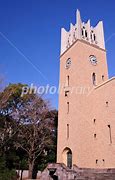 Soseki went to Waseda wanting to see the
barren fields and bamboo groves of Negoro,
but there was no trace of them, and instead,
where my house once stood, a boarding house
and a pawn shop had been built.
Soseki went to Waseda wanting to see the
barren fields and bamboo groves of Negoro,
but there was no trace of them, and instead,
where my house once stood, a boarding house
and a pawn shop had been built.
The shadows
of
three pine trees
in the moonlight i
ntersect
with
each other.
【参考】冰髯玉節間苔枝、 痩影参差落墨池。 最憶山陰山雪裡、
西窗相對鬢若絲。 劉永之題
・冰髯の玉節 苔枝の間
苔むした枝の間に、氷の髯が張って、氷の結晶が、玉の節のようだ 山影参差として硯池に落つ
痩せた枝の影は、それと似た姿を、硯池の上に写す
最も憶ふ山陰の山雪の裡
痛感する、山の北側の深い雪の中にいて
西窗相對す鬢の絲のごときを
西の窓から対する自分の鬢も、絲のように細く白いことを
*冰髯:友も自分も白髪白髯になった意味を含む 23)に続いて、友も自分も友に加齢した現実を実感した。
24
菟原処女の伝説と関連する諸古墳・氏族と葛飾の真間娘子が題材か。
『万葉集』では高橋虫麻呂(巻第九、歌番1809〜1811)、田辺福麻呂(芦屋処女。巻第九、歌番1801〜1803)、大伴家持(巻第十九、歌番4211・4212)の三人が莵原処女伝説を歌い、平安時代の『大和物語』(一四七段)ではこの伝説が脚色されて、舞台が生田川となり、謡曲『求塚』(観阿弥または世阿弥の作)では女が川に投身したので男たちは刺し違えて死んだ、とされる。森鴎外はこの伝説を題材として戯曲『生田川』を書いた。関東でも下総国葛飾郡の真間(現市川市辺り)の手児奈(娘子の意)の伝説が、同様に多くの男に求婚されて自害したこととなっていて、これも高橋虫麻呂が歌(巻第九、歌番1807,1808)をよんでいる。
いま神戸市の東灘区御影塚町の処女塚古墳を真ん中にして、西方二キロほどに灘区都通の西求女塚古墳(
菟原壮士)、東方二キロ弱に東灘区住吉宮町の東求女塚古墳(
茅渟壮士)があって、海岸部にほぼ一直線で並んでおり、これらが彼ら三人の墓だと伝えられる。
菟原処女の話は伝承だから、まず史実ではなさそうであるが、それに関わる前期古墳が三基残されるというのは興味深い。古墳の規模は、現在墳形が崩れているものもあるが、西求女塚(全長九八M超)、東求女塚(全長約八〇Mと推定)、処女塚(全長約七〇M)の順とされており、神戸市東部あたりでもこれらより大きい古墳は数少ないから、この地域の豪族を葬った墓とみられる。なかでも、副葬品が殆ど知られない処女塚を除くと、東・西の求女塚は三角縁神獣鏡などの銅鏡を多量に出土したから、これらが古墳時代前期の重要な古墳であったことが分る。そこで、これら古墳が造られた時代や背景・契機を探ってみようとするものである。
最近までの発掘調査によって、西求女塚と東求女塚の考古学的状況が次第に分かってきた。その概要としては、西求女は箸墓古墳同様のバチ形の前方後方墳にも注目され、三角縁神獣鏡七面、画文帯神獣鏡・獣帯鏡各二面
など合計十二面の銅鏡と紡錘車形石製品や各種鉄製品が出土した。三角縁神獣鏡は椿井大塚山・佐味田宝塚や福岡県の石塚山古墳、広島県の中小田一号墳などの出土鏡と同笵関係にあることが知られる。処女塚からの出土品は勾玉や壺形土器や鼓形器台くらいしか知られないが、東求女塚からは内行花文鏡・画文帯神獣鏡各一面及び三角縁神獣鏡四面、車輪石などが出土し、三角縁神獣鏡が福岡県原口古墳出土鏡と同范鏡の関係にあることが分かっている。処女塚の北方近隣にあるヘボソ塚古墳(全長約六〇Mの前方後円墳)からも、三角縁神獣鏡三面(京都府南原古墳などと同范鏡関係)・画文帯神獣鏡一面など合計六面の銅鏡や石釧・勾玉などが出土している。葦屋にも三角縁神獣鏡が出土した阿保親王古墳がある。
ともあれ、菟原郡には東求女塚の後ではめぼしい古墳は殆ど築造されなかったようであり、これも、住吉神奉斎氏族が摂津国住吉郡のほうに遷った事情に因るものか。菟原処女のモデルになった女性がいたとしたら、こうした海神族関係者であろうとみられ、その大阪湾海上交通を通じて、遠く和泉の茅渟壮士も求婚にやってきたのであろう。神の妻たる「巫女」的な存在ではないかともみられる菟原処女が、茅渟壮士のほうに心惹かれたように『万葉集』に歌われるのも、茅渟に近い住吉郡への住吉神・津守氏の移遷を示唆するものだったのかもしれない 問題の三古墳は、副葬品や墳形などからみて、前方後方墳二基が若干早いかほぼ同時期に築造されたとみられ(
実際の築造時期はそれぞれ異なるとして、その場合には西求女塚が最古で、次が処女塚とされるようだが、あまり差がないか)、六甲山南麓の住吉川及び石屋川の河口部に近い要港(
武庫港)を押さえた瀬戸内海の海上交通に影響をもつ首長の墳墓だとみる見解が多い。
この見方は妥当だとみられ、さらに推し進めれば、西への航路としては次の播磨の室津港に近隣する揖保郡の権現山古墳群と同様、景行天皇の西征に関係があったとみられる。このほか、瀬戸内航路の要港たる備前の牛窓港や備後の鞆港付近にも、三角縁神獣鏡を出土した古墳がある。同范鏡の分布などからみて、三角縁神獣鏡が大量に出土した大和纏向の黒塚古墳と同じく、景行天皇との関係の深さを無視できない。
東求女塚の北方近隣にある住吉宮町遺跡は、弥生時代から中世にかけての複合遺跡で住吉川が形成した扇状微高地にあり、合計七二基の古墳も発見されている。そのなかで出土した埴輪には、馬形埴輪、力士や顔に入れ墨をした男という人物埴輪もあるとされ(『続日本古墳大辞典』)、住吉という地名からみても、海神族に関係があったことが窺われる。
地名的にも、『和名抄』では兔原郡では八郷あって、後ろから「住吉郷…津守郷…葦屋郷…」という順に並んでおり、これがほぼ西から東への郷域の配置を思わせる。津守郷はまさに港津の管理者の居住地であり、海神たる住吉三神の祭祀に奉仕したのが津守連氏やその同族の阿曇連氏であった。阿曇連に「阿曇目」という
入れ墨の習俗があったことは、履中紀に見える。「灘」という地名も、これら諸氏の起源の地である筑前国那珂郡(
福岡市)に由来するが、当地には住吉神社(
福岡市博多区住吉)という式内名神大社があり、永く阿曇連の一族が奉斎した。
『日本書紀』の神功皇后摂政元年二月条には、神功皇后の韓地征討に随行した津守連の祖・田裳見宿祢に関連する話が見える。そこでは、海神の筒男(住吉)三神の和魂が「大津の渟中倉(ぬなくら)の長峡」、すなわち務古水門(武庫の泊)を押さえる摂津国兔原郡住吉郷に居て(『古事記伝』『本住吉神社誌』などの説)、往来する船を監視したことが記される。この地の住吉神社は、『住吉大社神代記』にも住吉神の主要七社のうちの一つで、摂津国菟原郡の住吉社として、筑前国那珂郡の住吉社などとともにあげられる古社である。
仁徳朝になって住吉郡墨江に港津が定められたが(仁徳記)、そのときに今の住吉大社の地(大阪市住吉区住吉町)に住吉神社が遷座し、津守氏が住吉神主となって代々奉斎したことが知られている(『姓氏家系大辞典』など)。住吉神社の旧地には、住吉宮町遺跡のなかに本住吉神社がある。同社が明治の旧県社であったものの、延喜の式内社ではなかったこともあって、上記「渟中倉の長峡」(『摂津国風土記』逸文の住吉条には「沼名椋の長岡の前」)を現在の住吉大社の地とみる説がやや多数のようであるが、神社の沿革や船舶監視の地理事情からみても、宣長説が妥当だとみられる。東北近隣の東灘区本山には式内社の保久良神社があり、こちらは神武東征の際に神戸の和田岬あたりから難波への海上先導にあたったと伝える椎根津彦(珍彦)を主神とし、その後裔の倭国造一族の倉人氏(後に大和連を賜姓)が奉斎したとみられるが、津守氏の同族の海神族であった。
from『MANYOU』
・Mr.Mushimaro Takahashi
[KATHUSHIKA NO MAMANO OTOME] SONG
When
he comes
to a Mama well i
n Katsushika
and
sees
the women standing i
n a row
drawing water,
he is
eminded
of
the young women
of
Mama
who
once lived here.
[SEE THE GRAVE OF A UNAHARA MAIIDEN
ee the Grave of the Unahara Maiden]SONG
The branches
of
the tree
above
the maiden's grave
are
swaying, l
eaning towards t
he country
of
Mr.Chinuwotoko, j
ust
as
legend has
it.
25
I saw Mrs. Otsuka in front of the comedy
hall in Hikage-cho.
(Higageーcho)
It has been established as a common place
name since the Edo period. It is a new road
behind the west side of Shibaguchi 2-Chome
and 3-Chome, Gensuke-cho, Tsuyutsuki-cho,
and Shibai-cho. This new road is part of
the town's registered land, and in 1664 (Kanbun
4), the landlord shortened the end of the
land by two ken each to make it a road (Machikata-kakiage).
The west side was a samurai residence, and
the road was named after the narrow width
and poor sunlight. This name was used until
before the Pacific War. It is quite wide
on the eastern side of the road that runs
roughly north to south through Shinbashi
3-Chome to 5-Chome, from between the current
19th and 20th lots of Shinbashi 2-Chome to
between 22nd and 23rd lots of Shinbashi 6-Chome.
During the common name era, Hikage-cho (Hikage-cho/Hikage-cho)
was between the current First Keihin and
the road one block west of it.
The area to the west of the northern part
was officially established as "Hikage-cho",
and in "Edo Kiriezu: Folklore: Shibaguchi
Minami, Atagoshita", Nakagawa Shuridayu's
middle residence was in 1-chome (it says
"After ○ Hikage-cho"), and Katagiri
Seizaburou's residence to the south was in
2-chome. Incidentally, the JR Hikage-cho
Bridge viaduct is in 2-chome. It was also
written as "Hiiin-cho" or "Hikage-cho".
In 1872 (Meiji 5), the Nakagawa Shuridayu
Middle Residence and the Katagiri Seizaburo
Residence were merged to form the 1st and
2nd Chome respectively. In that year, the
number of houses was 29 and the population
was 134 (according to the prefectural government
records).
On November 2, 1878 (Meiji 11), it was attached
to Shiba Ward, Tokyo Prefecture. On May 1,
1889 (Meiji 22), it was attached to Shiba
Ward, Tokyo City, Tokyo Prefecture.
Mrs. Otsuka has passed away
Throw all
the chrysanthemums
you have
into the coffin
26
Soseki's maternal cousins
・Soseki had two maternal cousins, M.r.Masu
and Mr.Sho.
・When Soseki became an adult, he stopped
coming to the house, so I guess he died.
But even if he did die, I don't know when
he died.
27
What happened on New Year's Day
・A man pointed out my formal attire.
・The man expounded on his theory on art.
"Art Monism - All arts have the same
source, so if you understand just one of
them, you can understand the others."
・My opinion is different.
"Art is differentiation, it never starts
from a view of equality. Even if it starts
from a view of equality, those who want to
stand out have succeeded in differentiating,
so if we look at this fact as the source
of art, paintings, sculptures, writings,
all become useless. So everything there becomes
nothing. So there is no concrete thing that
you and I can share."
 Jean Simeon Chardin
28
The third cat and me
In 1904 (Meiji 37), Soseki's wife, Kyoko,
who hated cats, would always pick the kitten
out, but Soseki decided to keep it, saying,
"If she likes us so much, why don't
we just let her stay?"
・The first cat becomes a famous cat in some
sense.
・The second cat was short-lived. He grew
round enough to fit on my palm and wandered
around, but one morning I heard a grunting
sound, and when I looked, I found that my
family had crushed him. He lived for about
two days, but then died.
・The current black cat is the third generation.The
cat fell into the sesame oil, and its whole
body started to shine as if it had been covered
in cosmetics. It then lay down on the manuscript
I was writing with its body, which made me
angry.
・The black cat won't come near me. He got
a skin disease a few days before I got sick. I
too became sick at the thought of euthanizing
my cat with chloroform or some other method.
・When I got up from my bed and looked at
the cat, I saw that he had black fur and
was fat on his skin.
・It may have been a silly idea, but I felt
a connection with this cat.
29
For information on Soseki's family, please
refer to "Soseki and His Times"
by Jun Eto.
・While Soseki was always thinking of his
real parents as his grandparents, he heard
the truth from a maid. It's similar to the
story in『 The Tale of Genji』, where the
maid exposes the forbidden love between Genji
and Kiritsubo.
Soseki said:
・At that moment, I was more grateful for
her kindness than for telling me the truth.
Funny enough, I forgot her name and face,
but I have never forgotten her kindness.
Soseki reminds me of Yugiri-kun from『 the
Tale of Genji.』
30
continuation
・I have been geting disease for 1911
・I am at war with disease, just as Germany
and the Allies are at war.
After the guests had left, I thought.
I'm sure I'm not alone in this ongoing issue.
After listening to my explanation.
Someone who laughs when I'm joking,The Silent
One,
Someone who looks pitiful
There may be a lot going on in them that
neither I nor they are aware of.
What would they think if it exploded?
They will have forgotten their past memories.
Now and Then
And in that old gap
They cannot see any causal relationship there.
How would you like to do it?
In the end, all of us humans will be holding
the atomic bombs that we created in our dreams,
walking towards death and chatting to each
other.
・I envy people who don't understand the
meaning of the word continuity.
31
I bought Ota Nanpo's book.
大田南畝(蜀山人)のこと 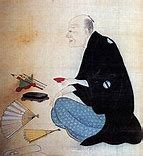 田沼意次 (寛政の改革)
・Ota Nanpo (1749-1823) produced a huge amount
of literary output, including rhapsodies,
classical Chinese, kyoka, essays, sharebon,
and kibyoshi.
・The shogunate-han system was reaching a
deadlock. Naturally, reforms were carried
out, but they did not go well. I think it
is useful to understand the eras as follows:
"Tokugawa Yoshimune's Kyoho Reforms
(1716-1735 or 1745)" → "Tanuma Okitsugu's Tanuma era"
→ "Matsudaira Sadanobu's Kansei Reforms
(1787-1793)" → "Tokugawa Ienari's era as
ogosho" → "Mizuno Tadakuni's Tenpo
Reforms (1841-1843)."
・To add a little more detail, the Tanuma
period, if viewed macroscopically, is the
period between the Kyoho Reforms and the
Kansei Reforms, but if interpreted narrowly, it refers to the period from 1767 (Meiwa
4), when Tanuma Okitsugu (1719-1788) was
promoted to chamberlain, to 1786 (Tenmei
6), when he fell from power.
・The "Ohogosho Era" refers to
the period under the 11th shogun, Tokugawa
Ienari (1773-1841, in office 1787-1837).
Ienari became shogun in 1787, the same year
that Matsudaira Sadanobu's (1759-1829) Kansei
Reforms began (following the downfall of
Tanuma Okitsugu).
・Ienari was only 15 years old. In 1793, the
sixth year of the Kansei Reforms, Ienari
and Matsudaira Sadanobu had a fight, leading
to Sadanobu's downfall. As a result, Ienari
became a close aide to the shogun, corruption
was rampant in the shogunate, and inflationary
policies led to soaring prices.
・The period of the Ohgosho corresponds to
the Kansei (1789-1801), Kyowa (1801-1804),
Bunka (1804-1818), Bunsei (1818-1831), and
Tenpo (1831-1845) eras, but is also known
as the Bunka-Bunsei period (Kasei period),
when Edo culture flourished greatly.
・Ota Nanpo (1749-1823) was a figure during
the Tanuma era, the Kansei Reforms, and the
Ohgosho period.
・The Kansei Reforms, which were accompanied
by a crackdown on public morals that did
not allow criticism or satire of the shogunate,
led Nanpo to break away from kyoka and transform
himself into a serious person who put his
official duties first. However, although
he was a serious official by day, by night
he was a first-class playboy and writer.
・Ota Nanpo studied under two Confucian scholars.
In 1766 (Meiwa 3), at the age of 18, he wrote
the Chinese poetry textbook Minshi Tekizai.
The following year, in 1767 (Meiwa 4), at
the age of 19, he published Nebo Sensei Bunshu,
a collection of rhapsody and prose. It contains
26 rhapsody and 10 pieces of rhapsody, and
the preface was written by Furai Sanjin.
Furai Sanjin was the pen name of Hiraga Gennai
(1728-79).
・There is a poem called "Poverty Exchange"
by To Fuo of the Tang Dynasty (712-770).
If you wave your hands, they will
become clouds
If you cover your hands, it will
rain
Frivolous
Why do we need to count?
Have you not seen the friendship
we had in our poor times?
This path that people today have
abandoned is like sand.
There are so many frivolous people who change
their attitudes so frequently, as if they
were clouds or rain, that it is impossible
to count them all. You know them, don't you? The
friendship between Mr.Guan Zhong andMr. Bao
Shu when they were poor.The friendship between Guan Zhong and Bao
Shu when they were poor.
Educated people at that time were familiar
with To Fu's .I feel that this is a strong
social satire, that in today's world, the
friendships of poverty have been abandoned
and everything depends on money, how pitiful.
当時の教養人は、杜甫の『貧交行』を知っていたから、『貧鈍行』を読めば、必ず、杜甫の『貧交行』も思い浮かぶことでしょう。そして、読者の頭の中は、『貧鈍行』と『貧交行』がミックスされ、今の世は、貧しいときの友情は捨て去られ、すべては金次第、なさけなや……という強烈な社会風刺を感じるようでありました。
32
The next day I returned the book I bought
yesterday.
・This is because the book is priced cheaply.
・I felt uncomfortable with this evil act.
・On the one hand I resented the bookstore,
but on the other hand I was angry at my own
cunning.
・I gave the book to the bookstore for free,
so I felt like I'd been cheated out of my
money.
・This is a story that happened in my childhood.
33
Intuition
・I cannot see the people who appear before
me as either good or bad, so my attitude
must change depending on who I am dealing
with.
・My problem is that I am inclined to judge
people based on my own extremely uncertain
intuition, but I don't verify that judgment
with objective facts.
・Right now, I have only two thoughts: either
I'm stupid and will be deceived by others,
or I'm suspicious and can't open up to others.
I feel anxious and uncomfortable. What an
unfortunate human being I am.
34
On January 17, 1914, he gave a lecture at
Tokyo Higher Technical School, the predecessor
of Tokyo Institute of Technology.
・There are two directions of human energy.
One is the effort to save energy (shortening
distance, saving time, etc.) and to make
our lives more convenient. This is your specialty.
The other direction is to consume energy,
such as literature, art, music, and drama.
We are moving in this direction. From this
direction, there is no concept of time or
distance. There is no need for something
fast like an airplane, nor for something
sturdy, nor for a large number of works.
It is enough to write even just one piece
in a lifetime. In other words, it is the
opposite of you who aim to save time and
mass-produce.
・The work you do has a universal nature.
Ours, on the other hand, is personal. However,
that doesn't mean we can be careless; sometimes
we need rules too. The reason we need them is because they give depth to
the work. When you have 100 or 200 readers,
there must be something in common that connects
their minds. This is one rule.
・For you, it doesn't really matter who made
it, but for us, when we see a work, we think
of the person who made it. What you value is not yourself, but your
skill. For us, it is important to be human.
In other words, the essence of a writer is
the human being, and everything else is just
an accessory or decoration. It is interesting
to look at the world from this perspective.
The world must be centered around oneself.
I believe that not only traditional writers
and artists, but everyone must be aware of
the need to demonstrate individuality and
personality as a human being's duty.
・Later, Soseki heard rumors that the students
at Tokyo Higher Technical School had not
understood the purpose of the lecture. Hoping
to somehow benefit the audience, Soseki expressed
his regrets about having given the lecture
at Tokyo Higher Technical School in a section
of "Behind the Glass Door."『硝子戸の中』
What made Soseki want to give a lecture at
the Tokyo Technical University may have been
related to the Ashio Copper Mine incident
and Misao Fujimura's lover. It may have been
the novel "The Miner."『抗夫』
In any case, he must have been thinking about
Misao Fujimura.
35
This story also appears in Michikusa[『道草』
A little way past the rickshaw shop he suddenly
encountered someone unexpected. The person
appeared to have climbed the slope at the
back gate of Nezu Gongen shrine, heading
north in the opposite direction from Kenzo,
and when Kenzo casually looked ahead he found
himself in his line of sight from about 1.18meters
away.
・This is how Shimada, who was once Kenzo's
adoptive father, appears in "Dousa."『道草』 It is well known that the model for Shimada is Soseki's adoptive father, Masanosuke Shiobara.
・In 1874, Masanosuke had an affair with
Hineno Katsu, but after separating from his
wife Yasu, he lived with his second wife
Katsu for 45 years until his death in 1919.
・Soseki was a rare individual who was
well versed in the cultures of the East and
West, past and present. Edo culture was one
of his major themes. Soseki learned about
it at comedy halls.
・Shonosuke often took Soseki, who was
a child, to a comedy hall called Isemoto in Setomonocho, Nihonbashi. If it weren't
for Shonosuke, Soseki would never have met
Shiki through the comedy hall, and "Soseki
Literature" might never have been born.
36
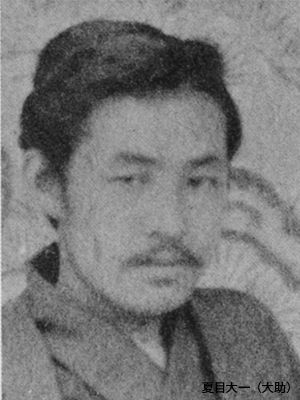 When Soseki returned to the Natsume family,
he most respected his eldest brother, Daisuke
(Daiichi). He had dropped out of Kaisei School
(now the University of Tokyo) due to a lung
disease and worked as a translator for the
Metropolitan Police Department.
When Soseki returned to the Natsume family,
he most respected his eldest brother, Daisuke
(Daiichi). He had dropped out of Kaisei School
(now the University of Tokyo) due to a lung
disease and worked as a translator for the
Metropolitan Police Department.
・Daisuke passed away from pulmonary tuberculosis
on March 21, 1887. He lived a short life
of 31 years and two months.
"In "Behind the Glass Door,"『硝子戸の中』
it is written that a geisha from Yanagibashi
(the entertainment district) came to visit
Daisuke after he had died.
『処女作追懐談』によると。
・茲で一寸話が大戻りをするが、私も十五六歳の頃は、漢書や小説などを読んで文学というものを面白く感じ、自分もやって見ようという気がしたので、それを亡くなった兄に話して見ると、兄は文学は職業にゃならない、アッコンプリッシメントに過ぎないものだと云って、寧ろ私を叱った。
・Let me go back a little bit to the main
topic here. When I was about 15 or 16 years
old, I read Chinese classics and novels and
found literature fascinating, and felt like
I wanted to try it myself. When I mentioned
this to my older brother, who has since passed
away, he actually scolded me, saying that
literature should not be a career, but was
nothing more than an accompaniment.
・米山保三郎という友人が居た。それこそ真性変物で、常に宇宙がどうの、人生がどうのと、大きなことばかり言って居る。ある日此男がたずねて来て、例の如く色々哲学者の名前を聞かされたあげくのはてに君は何になると尋ねるから、実はこうこうだと話すと、彼は一も二もなくそれを却けてしまった
・I had a friend in my high school class
named Yasusaburo Yoneyama.
・At that time he launched into a lively
debate, saying that no matter how skilled
one may be in Japan, it would be impossible
to leave behind a building like St. Paul's
Cathedral for future generations.
・それよりもまだ文学の方が生命があると言った。
・He said that literature has more life
than that.
・I decided to become a literary scholar
again.
・I simply had the hope of mastering English
and writing, and of astonishing Westerners
by producing some great literary work in
a foreign language.・
[He
is Yoneyam][I is Natsume]
37
「父母未生以前本来の面目」に苦しめられた漱石が、新たに文学のテーマとして取り上げたのが「父母未生以前の記憶と情緒」であると考えられる
It is believed that Soseki, who was tormented
by "his true identity before his parents
were born," took up "memories and
emotions before his parents were born"
as a new literary theme.
『硝子戸の中』29にも出ている話。
・I was born to my parents in their later years,
and was what they call the youngest child.
When I was born, my mother said she felt
ashamed to be pregnant at such an age, a
story that is still repeated from time to
time. It may not have been just because of
this, but soon after I was born, my parents
sent me away to the countryside. Of course,
I have no memory of that place, but when
I heard about it after I became an adult,
it seemed to me that they were a poor couple
who made a living selling antiques.
・I don't know when I was taken back from
that village, but I was soon adopted by another
family. I think I was about four years old
when I did this. I grew up there until I
was eighty-nine, when I was old enough to
understand things, but then some strange
troubles arose in my adoptive family, and
I ended up returning to my parents' home
again.
(See "Michikusa" 43, 44)
・Picking
shepherd's purse,
a motherless child,
a family
・Don't forget
to change
my late mother'
who
changes clothes
・The clothes
of
a motherless person
are
gone.
・Carrying
a chrysanthemum,
A wet nurse
came
from
her residence.
菊堤て乳母在所より参りけり
(道草から)
Soon, Yasu told Kenzo (Soseki) the truth.
According to him, she was the best person
in the world. In contrast, Shimada (Shonosuke)
was a very bad person. But the worst of all
was Mito-san. When Yasu used words like "that
guy" or "that woman," Yasu
looked extremely annoyed and infuriated.
Tears flowed from his eyes. But this dramatic
expression only made Kenzo feel worse and
had no other effect.
漱石作品における紀州藩は、『趣味の遺伝』の外は『行人』で紀州様と語られているのみである。『趣味の遺伝』の「父母未生以前の記憶と情緒」による浩さんと小野田令嬢の相思相愛は、紀州藩出身者同士の恋愛として物語られている。なぜ紀州藩なのかだが、江戸、徳川幕府、紀州家について先述した外に、牛込にはさらに清水徳川家下屋敷が、四谷にもさらに田安徳川家下屋敷があり、また四谷に隣接する赤坂には紀州藩江戸屋敷もある。江戸牛込の父・江戸四谷の母になじみ深い、これが後に漱石が関西巡回公演をする目的となったのであろう。
38
.jpg) 帯
帯 .jpg) I still have memories of my mother wearing
a kimono and obi.
I still have memories of my mother wearing
a kimono and obi.
39
It was the emotions when faced with the choice
between life and death that this novel depict
the anguish.