.jpg)
石田梅岩の思想 ―Psychology of Ishida Baigann.
2025/02/30現在日本全体は江戸時代で徳川吉宗が治めていた頃と類似している。このとき、活躍したのが石田梅岩である。
30 February 2025 Japanese society today
The whole situation is similar to the Edo period, when Yoshimune Tokugawa ruled. Ishida Baiguan was an active figure at this time.
Also the merchants who have wealth and produce and seem to have nothing to fear in this world,
During the Tokugawa period, he was not a naturalised citizen.
This was due to the existence of an undivided system ≪(1) samurai, (2) farmers, (3) industry, (3) merchants≫.
This is an example of a highly ranked warrior.it was the Yodoya Tatugorou scandal of 1705.
Tatsugoro's wealth was more than that of a daimyo, but he was accused of buying expensive kimonos and his property was confiscated by the warriors.
from『Choninnkoukennroku]』MitsuiTakafusa
Between the Kanbun period[16611673]and the Genroku period[1668-1704], there was a shift of power in the society of the townspeople.
In the early years of the Tokugawa regime, the Tokugawa shogunate had special powers with various privileges for those who served the shogunate.
These merchants were so comfortable with their profits that they neglected their primary duties, resulting in nothing but waste.
In addition, there has been a purge of corruption,They finally lose their competence in the townspeople's society.
In contrast, the development of the newly emerging commodity money economy has led to the modest merchants of wholesalers
and money changers have grown greatly.
At last, a man who has made a name for himself as an independent and self-reliant
who were able to become aware of their merchant backgrounds.
At the root of the spirit of these emerging merchants was the spiritual learning of Ishida Baigan.
‘Many a time we take double advantage, eat sweet poison and die by ourselves.’
'!The real merchant thinks that he stands first and I stand.’
With the growing awareness of environmental issues since around the 1970s
and continuing corporate scandals, CSR (Corporate Social Responsibility) has become a popular topic, particularly in Europe and the USA.
.jpg) both sides drawing a tie
both sides drawing a tie In the Edo period, merchants were considered to be too poor and too lowly.
The reason was that merchants had no sense of ethics and only sought to seek their own profit.
In these times, Iwata Baiguan has said.
��both sides are declared together”
Kyoho reforms undertaken by the Tokugawa Yoshimune (in office 1916-45)
When Tokugawa Yoshimune took office as shogun, he dismissed Manabe Akifusa and Arai Hakuseki, who had previously held the real power
in the shogunate administration.
A rapid succession of new and competent people has been appointed.
1722.Temporary tax increases for various feudal lords.
Let the lords bear the shogunate's financial burden!
The tax rate has been increased to 50% of the crop, from the previous rate of 40%.
Have a look at the rich townspeople's offers of help.'The rich keep investing in new rice field developments, won't they!
Efforts were also made to reduce spending.
The parties were asked to resolve financial issues.
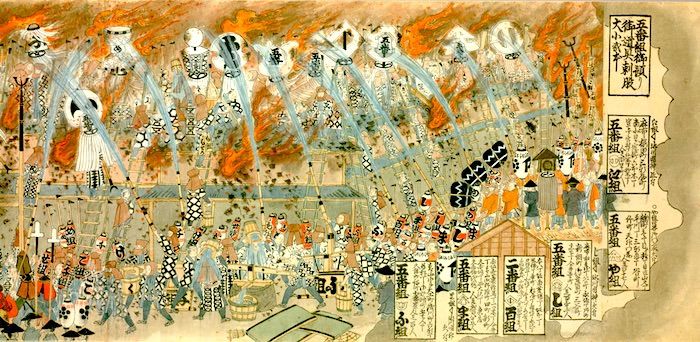
The Machibugyo 、 Ookata Dasuke formed an organisation called Machibikeshi Machibikeshi in every town in Edo.
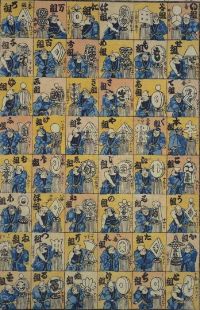 The townspeople organised Iroha 47
(48 groups).
The townspeople organised Iroha 47
(48 groups).